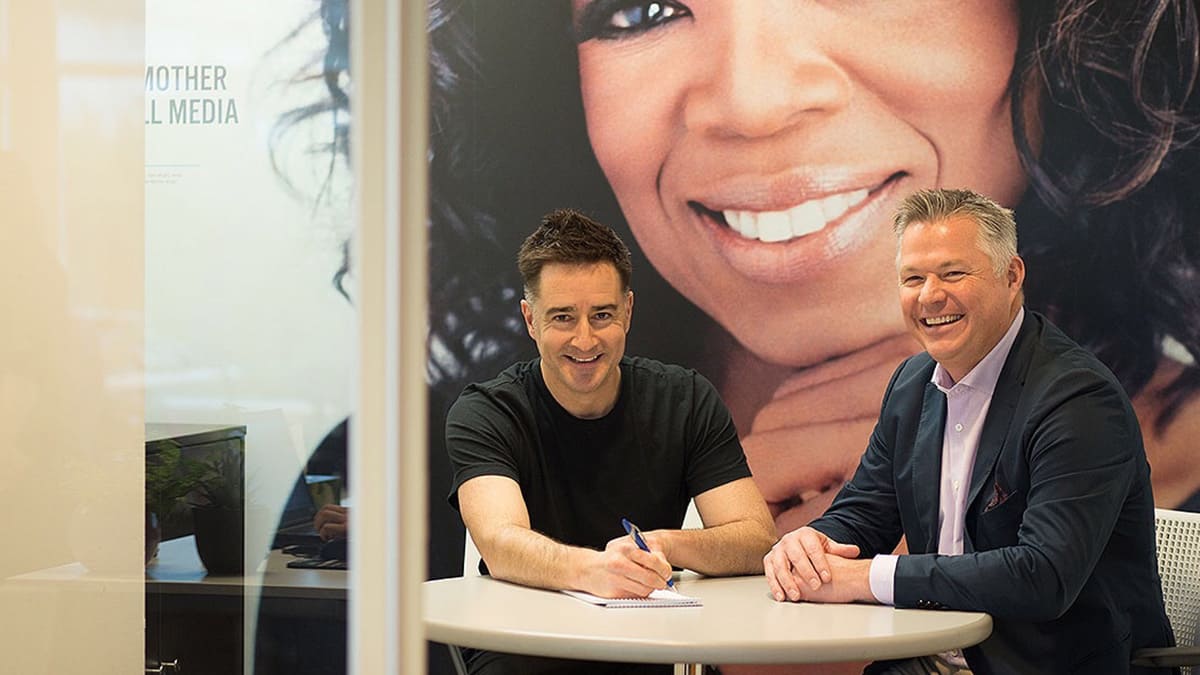
Good Mornings podcast (2026): Brian Scudamore on The Great Junk Transfer




TL;DR
Joining host Chris Oaks on the Good Mornings podcast, 1-800-GOT-JUNK? founder and CEO Brian Scudamore breaks down findings from the 2026 Great Junk Transfer study.
- Brian shares key findings, including why 48% of people globally would rather inherit nothing than piles of personal belongings, and why focusing on just 1–5 meaningful items matters most.
- Starting early conversations with loved ones can reduce guilt and create a liberating fresh start for everyone, so you can focus on what truly matters.
- 1-800-GOT-JUNK?’s friendly two-person teams can help families navigate cleanouts with trusted relief.
Published by: Good Mornings Podcast Edition
Host: Chris Oaks
Guest: Brian Scudamore, Founder and CEO of 1-800-GOT-JUNK?
Originally aired August 28, 2026.
Brian Scudamore and Chris Oaks talk about The Great Junk Transfer
When I sat down with host Chris Oaks on the Good Mornings podcast, we talked about a defining cultural shift that is affecting millions of families. While financial headlines constantly cover the great wealth transfer moving down from baby boomers, another reality is happening behind closed doors: the Great Junk Transfer.
The Great Junk Transfer and why 49% of Americans prefer a clean slate
People around the world are facing the loss of a loved one and navigating the overwhelming task of cleaning out a house, basement, or garage filled with a lifetime of belongings. While everyone welcomes inherited financial security, managing mountains of physical stuff is a very different story.
Our 2026 study with Talker Research revealed an eye-opening statistic: 49% of Americans would actually rather inherit nothing than inherit everything a relative owned. A new generation of millennials is looking at decades of accumulated possessions and realizing they simply do not have the space or desire for it all. In fact, most people surveyed told us they would prefer to receive just 1 to 5 meaningful items.
When you are grieving, the physical and emotional burden of managing an entire home's worth of clutter makes it even harder to heal, with 54% of respondents agreeing that sorting through a relative's belongings complicated their grieving process.
Starting early conversations to turn clutter into meaningful memories
During our conversation, Chris pointed out how overwhelming it felt when his own father passed away after 50 years in the same family home. I hear most often from families that they experience feeling stuck. People worry about fighting with siblings, feel guilty about getting rid of items, and struggle to figure out where things should go.
I shared with Chris that the secret to making this process easier is starting the conversation much earlier. My 75-year-old mother is currently downsizing her home with the help of a professional organizer, sorting through her artwork and deciding what really brings her joy while she is in great health.
I also recommend making the conversation about life rather than death. I plan to ask my father a simple question:
"If you had five items, if the house was to burn down and you had to run out of the house and save them, what would you save?"
Learning the personal stories behind those few cherished treasures is what truly matters. In an increasingly digital world, memories are stored in our brains, hearts, and shared experiences—not in heavy console televisions or unused furniture. Talking openly before a crisis hits removes the guilt, prevents family disagreements, and creates a liberating fresh start.
How our two-person teams deliver trusted relief during estate cleanouts
At 1-800-GOT-JUNK?, we know that clearing physical clutter is ultimately about creating emotional space. When families are faced with an estate cleanout or downsizing project, trying to sort, haul, donate, and recycle everything on their own can feel like an impossible chore.
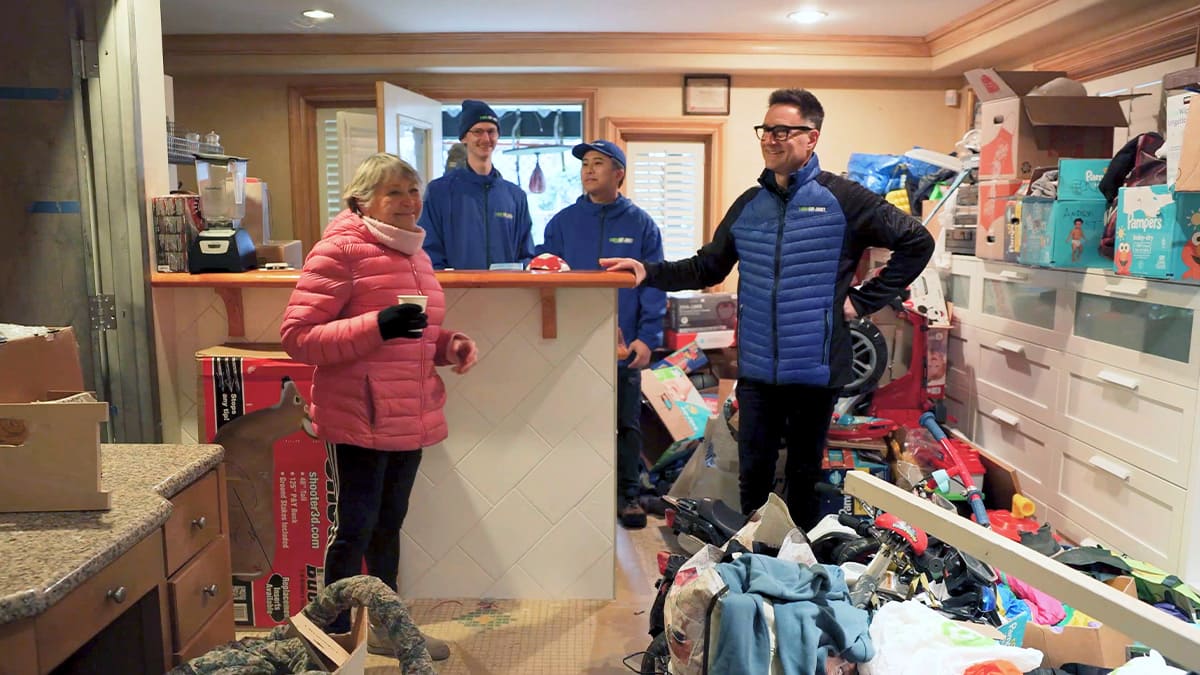
That is where our friendly, professional two-person teams come in to deliver relief. We do all the heavy lifting, sweep up the space afterward, and ensure items are diverted to recycling depots, charities, and local donation centers whenever possible. Customers do not have to lift a finger—all they have to do is point.
For anyone navigating an estate cleanout or looking for guidance on decluttering conversations, you are not alone. You can explore our full research study and inspiring community stories at greatjunktransfer.com.
Read the full interview
I was glad I could speak with Chris about this growing phenomenon, and how 1-800-GOT-JUNK? can help support. At the end of the day, I think I phrased it best when I said:
“No one's alone in dealing with this. Everybody has to deal with this at some point, and there are ways to make it easier.”
Interested in reading the full interview? Expand below to read even more of my conversation with Chris Oaks on the Good Mornings podcast.
Read the full transcript below
Chris Oaks: [00:00:02:29 - 00:00:25:16] Good morning, I'm Chris Oaks. Coming up today: Last month, Hancock County Probate and Juvenile Court Judge Kristen Johnson was appointed to serve on a study committee to evaluate the way the state handles the placement of delinquent children. This week, that committee held its first meeting. Also this morning, you've heard of the great wealth transfer as younger generations inherit the estates of baby boomers.
Chris Oaks: [00:00:25:23 - 00:00:56:16] Well, it's not just a lifetime of accumulated wealth they're inheriting. It's often a great junk transfer, too. We'll preview week two of the high school football season as the Trojans travel to Lima Senior in the season's first road trip, and another collection of delicious and easy recipes from Kyra's Kitchen. This is the Good Mornings podcast edition for Friday, August 28th, 2026.
Chris Oaks: [00:23:42:08 - 00:24:04:02] Well, you've heard of the great wealth transfer as younger generations inherit the estates of baby boomers when they pass on. Well, it's not just a lifetime of accumulated wealth that they are inheriting—it's often a Great Junk Transfer as well. Joining us this morning is Brian Scudamore, founder and CEO of 1-800-GOT-JUNK?.
Chris Oaks: [00:24:04:03 - 00:24:17:08] Brian, we say that somewhat facetiously, but there are a lot of belongings, obviously, that usually come with the disposition of a loved one's estate, and it can frequently be quite emotional.
Brian Scudamore: [00:24:17:10 - 00:24:41:05] It sure is. I think one quarter of our customers, people that call us, are facing the loss of a loved one and having to clean out their home, garage, basement—a lifetime's worth of belongings. Of course, everyone wants the wealth that's getting passed down, but do they all want the stuff—the mountains of junk or the mountains of things and belongings?
Brian Scudamore: [00:24:41:07 - 00:25:08:27] There's a new generation of youth—the millennials—that are getting things handed down to them. They're inheriting something when their parents or grandparents pass, and they're going, "I didn't ask for this stuff. I don't want all this stuff." A Talker Media survey taught us that they want one to five meaningful things. When you're grieving the loss of a loved one, having the emotional burden of all this stuff on top of it is a real struggle.
Chris Oaks: [00:25:08:28 - 00:25:20:29] Yeah, and that's the thing. You referenced the survey that you recently commissioned about this. What did you find? What really stood out to you in that survey?
Brian Scudamore: [00:25:21:04 - 00:25:47:00] Well, the shocker to me was that 49% of Americans would rather inherit nothing than inherit everything. When someone passes, especially if it's tragically or suddenly and you just have all this stuff accumulated that you don't know what they treasured and what they would want you to keep. You try and give things away—the donatables, the recyclables.
Brian Scudamore: [00:25:47:01 - 00:25:52:18] It's overwhelming on top of an already overwhelming personal situation.
Chris Oaks: [00:25:52:19 - 00:26:14:18] Well, yeah. And that's the thing for me. I remember in my own case, when my dad passed away, I had been preparing myself for the emotional side of having to go through all of his stuff. It was the sheer volume of things from 50 years in the house that I grew up in. It was just overwhelming.
Brian Scudamore: [00:26:14:20 - 00:26:40:25] That's the word we hear over and over and over. Because it's true: 54% of people in the survey said that dealing with a relative's belongings made it harder to grieve. How can you make space for new possibilities when you're just dealing with all of the stress of siblings, friends, and family fighting over what should be kept and what should be thrown out?
Brian Scudamore: [00:26:40:28 - 00:26:50:12] Trying to find places to give things away—it's a big job, and it does get in the way of the unfortunate job of trying to grieve someone's loss.
Chris Oaks: [00:26:50:14 - 00:26:58:13] And so what can families do to make this process easier on themselves and on each other?
Brian Scudamore: [00:26:58:16 - 00:27:18:27] Well, I think it's talking about it sooner. My mother, who's 75 in great health, is decluttering and downsizing right now as we speak. She brought in a friend who's acting as a professional organizer to help her sort through—as an artist, she's got all this art—does she really want to keep it all? What things does she want to keep?
Brian Scudamore: [00:27:18:27 - 00:27:41:17] What are the real treasures? And talking about it now—just having a life that's a little more liberating while you're still living versus being surrounded by too much stuff. I think we can also make the conversation about life, not death. I will be asking my father, "If you had five items, if the house was to burn down and you had to run out of the house and save them, what would you save?"
Brian Scudamore: [00:27:41:22 - 00:27:51:07] What's important to him? I really want to know the stories behind those items. So talking about it sooner—I think that is the secret here.
Chris Oaks: [00:27:51:13 - 00:28:13:24] And it is so difficult sometimes to have... We talk about all of these difficult conversations we really need to have while our loved ones are still with us. This is another one of those that, in the back of our mind, reminds us mentally that we all are going to be gone someday. But so important to start that conversation right now.
Chris Oaks: [00:28:13:25 - 00:28:28:07] And as you were touching on just a moment ago, this also gives you the opportunity to head off any potential arguments about who gets what. You're going to hammer out those disagreements without the element of grief adding to the emotion of it.
Brian Scudamore: [00:28:28:14 - 00:28:53:25] You're absolutely right, Chris. That's a difficult conversation, but it doesn't have to be as hard as it is after the fact if we approach people sooner. I think memories are stored in our brains, they're stored in our hearts—they don't have to be things that are always kept in physical things. We're in an increasingly digital world. What stuff do we actually have to hold on to?
Brian Scudamore: [00:28:53:27 - 00:28:57:20] And what stuff can we just preserve in our mind?
Chris Oaks: [00:29:23:05 - 00:29:48:10] Because at the end of the day, I think if you don't have those conversations, if you don't make a plan, then you end up labeling it all as junk, which then brings up feelings of guilt about being dismissive of the things that your loved ones spent their lives accumulating, which in turn stirs up more emotions and becomes something of a vicious cycle.
Brian Scudamore: [00:29:23:05 - 00:29:48:10] Yeah. And sometimes we also end up with things that really don't have any value. The number of big TV consoles that I've seen in my life, when we're in a world of laptops, iPads, flat-screen TVs... Sometimes you have all this stuff where you're just like, "There's no value here, nobody wants it," but you still feel the guilt of throwing anything of Grandma's out the door.
Chris Oaks: [00:29:48:15 - 00:30:09:17] Once again, Brian Scudamore is founder and CEO of 1-800-GOT-JUNK?, obviously very familiar with this, having seen many families go through it. Where can folks get more information? We referenced that survey—you've got details on that and a lot there for people to think about on your website, right?
Brian Scudamore: [00:30:09:18 - 00:30:33:18] Yeah, they can find the survey, which I think is fascinating. It's a great study in what humans like to keep and what they hold on to. They can find the survey at greatjunktransfer.com. Lots of support there in terms of inspiring stories on social media of others who are dealing with this, because I think what we all need to keep in mind, Chris, is that you're not alone.
Brian Scudamore: [00:30:33:18 - 00:30:42:10] No one's alone in dealing with this. Everybody has to deal with this at some point, and there are ways to make it easier.
Chris Oaks: [00:30:42:12 - 00:30:57:18] Of all of the conversations that we talk about having to have with our loved ones, this is one that all too often goes overlooked. So we want to highlight it this morning. Brian Scudamore, thanks very much for taking the time. We appreciate it.
Brian Scudamore: [00:30:57:20 - 00:31:07:00] Thank you, Chris. Have a great day.
Frequently asked questions
What is the Great Junk Transfer?
The Great Junk Transfer refers to the physical side of the generational handover of physical possessions, where younger generations are inheriting an overwhelming influx of unwanted physical clutter. According to a 2026 study by Talker Research on behalf of 1-800-GOT-JUNK?, nearly half of Americans (49%) would rather inherit nothing at all than carry the burden of clearing a relative's house, with 56% stating that managing a loved one's volume of possessions actually hindered their ability to grieve. Because 45% of heirs report already running out of room in their own homes, the long-standing assumption that passing down every item expresses love is shifting toward a preference for keeping just a few meaningful, story-driven keepsakes over full houses of furniture and collections.
How does 1-800-GOT-JUNK? help families navigate emotional cleanouts and inherited clutter?
Clearing out a loved one’s home or dealing with generational clutter can be emotionally draining. 1-800-GOT-JUNK? provides full-service junk removal designed to take the physical stress off your shoulders. Friendly, uniformed team members handle all the sorting, heavy lifting, and loading from anywhere on the property—whether it’s a packed garage, attic, or basement. All you have to do is point to the items you want removed, allowing you to focus on your emotional well-being and memory-keeping.
What did Brian Scudamore discuss on the Good Mornings podcast?
On the Good Mornings podcast, 1-800-GOT-JUNK? founder Brian Scudamore spoke with host Chris Oaks about the Great Junk Transfer research, explaining why 49% of Americans would rather inherit nothing and how early family conversations simplify estate cleanouts.
How does 1-800-GOT-JUNK? assist families with estate cleanouts?
Our friendly, professional two-person teams handle all the lifting, sorting, hauling, and sweeping, diverting usable items to donation centers and recycling depots to give families peace of mind.